
"Wicked: The Eternal Promise" review The performances of the two main characters are impressive, but the sequel is still full of problems
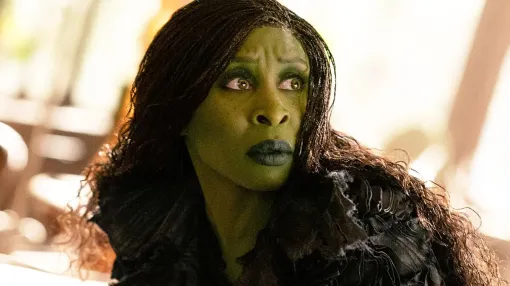
In the middle of Wicked: For Good, Wicked: Just OK, and Wicked: The Eternal Promise, where one of the many songs reaches its climax, Cynthia Erivo's Elphaba is forced to stand in a strong backlight with her backdrop to the sun of Oz, which has a troublesome glow. This sun tries to enter the screen every time. The camera slowly pans, and I finally don't have to squint to see what's going on in this movie—and for a moment, the screen shows a huge waterfall, but the waterfall reflects the same sunlight again, trying to hide the main character's figure in the backlight again. This small example is given to illustrate the problem at the heart of Wicked: The Eternal Promise. This work still has all the problems of the previous game. In addition, as is well known, the fact that the second act of the musical "Wicked" is not as good as the first act overlaps, adding to the problem. Although the specific number of years is not given, the stage of the story flies to a few years later. The cunning wizard (Jeff Goldblum) and his spokesperson, Glinda (Ariana Grande), the "good witch", make the people of Oz believe that the green-skinned "bad witch" Elphaba (Cynthia Erivo) is their greatest enemy. Meanwhile, Elphaba, who has been exiled to the forest, is determined to uncover the wizard's tricks and save the lives of animals that are gradually forgetting their words. It is a very serious movie with a very serious setting. There is no longer the light and explosive splendor that was in Act 1 = "Wicked: Two Witches". That's the problem with the gloomy second half of this story. The joy of meeting the characters for the first time has already been exhausted, and all that remains is to watch them make themselves unhappy. This is a strange shift in tone, and it doesn't mesh with the inherent absurdity of this world of the work. The musical "Wicked" is a very serious depiction of a story with a very absurd setting (I say it myself as a fan). However, in the stage version, there were always moments when I lightly noticed the ridiculousness of such premises, such as words with pronunciation that made me laugh involuntarily, or small words inserted at the perfect timing. On the other hand, "Wicked: The Eternal Promise" makes you feel like you're watching a war movie. There are action scenes, heart-wrenching human dramas, and even harsh scenes such as refugee escapes. The escape is one of the two original songs on the album, and it is also the background to the poignant anthem "No Place Like Home", which inspires listeners to "don't give in to the". Due to the excessive seriousness that this film imposes on itself, elements such as "talking animals" and "a group that calls themselves "munchkins" are rather disjointed. In the first place, the "dark and gloomy Wizard of Oz" approach has already been attempted in the 1985 film "Return to Oz" (original title "Return to Oz") and the 2007 miniseries "Outer Zone" (original title "Tin Man"). And unfortunately (again, as a fan myself), it was hard to say that it was going well at that time. In addition, there is the problem that most of these depictions are not visible in the first place. Director John M. Chu and cinematographer Alice Brooks continue to backlight every scene with the sun, lanterns, or torches lined up all over the wall. Perhaps because it was filmed at the same time as the previous film, there was already criticism from critics and fans about this method at the time of the previous film. The sequel is darker than its predecessor in every sense of the word (thankfully, except for many of the scenes where Grande appears). Some of the lights are so dim that Erivo's face is almost indistinguishable. That's why it's all the more frustrating. As in the previous film, it is evident that a lot of effort is put into creating a luxurious space where the actors stride around. Director Chu prepares a party for Glinda that is full of flowers, like a fairy queen's ball, on a scale that surpasses even the wedding scene of "Crazy Rich!" that he has worked on in the past. In addition, in the scene of "No Good Deed", which can be said to be the triumphant song of the villain, the tower that Elphaba transforms into her own hideout is like a battlefield in "ELDEN RING". The image of a cool, lifelike set being shrouded in shadows may be somewhat better than the overly bright and faded lighting of the previous film. However, in this work, the arrangement and movement of the characters are often very static, so in the end, it feels like you are just watching people walking around the set....
The linked article is in Japanese.

Online Game - DMM GAMES
PC and smart playing free registration online game! It is a community service that you can play with your friends with interests through games. Let's advance the game advantageously while sharing information with colleagues!PR